


Osteoarthritis is a group of diseases that arise for different reasons, but are similar in clinical manifestations and course.The basis of all arthrosis is damage to the joint components. Arthrosis is a progressive disease with dysfunction of the affected joint.Osteoarthritis of the knee joint (gonarthrosis) is a disease in which the cartilage, synovial membrane, ligaments and periarticular muscles of the knee joint are damaged.Osteoarthritis of the knee joint, the treatment of which requires an integrated approach, also requires your attention.And also at least a basic understanding of why and how this disease occurs.
Gonarthrosis: causes
The causes of arthrosis of the knee joint can be:
- Joint injuries: According to the scientific literature, about a third, and perhaps half, of arthrosis cases are preceded by an injury.A person may accidentally trip on the street or damage a joint while playing sports.First there will be a sharp pain, which will later be dull and slightly painful, but it does not cause much discomfort.Usually, in most cases, the joint will soon recover on its own and will show no signs of injury.But in rare cases, this unfavorable combination of circumstances can cause the development of arthrosis.
- Long-term overload of the joint: it is believed that those people whose profession is associated with long-term excessive load on the joints (professional athletes, postmen) may experience the development of early arthrosis of the joints.
- Inflammation of the joints (arthritis of the knee joint): when the joint becomes inflamed, biological and morphological changes occur, blood flow is disrupted, so it is arthritis that causes arthrosis of the knee joints (secondary arthrosis).
Additional risk factors
- Heredity.Usually, arthrosis of the joints is not directly inherited, but the "catalysts" in the development of arthrosis can be characteristics of the metabolism and structure of cartilage tissue, which are transmitted genetically.Also, the possibility of arthrosis can occur if a person has joint abnormalities or underdevelopment, or injuries at birth.
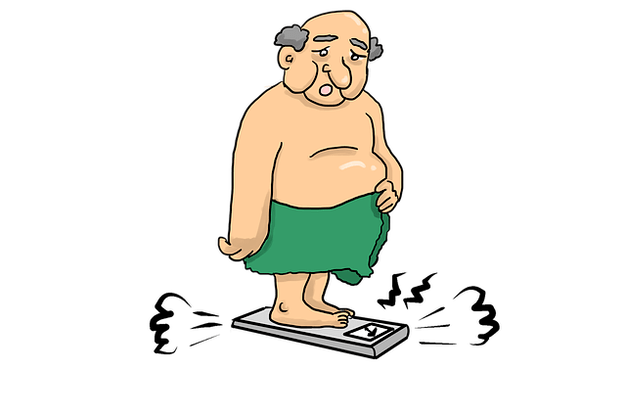
- Excessive weight.Excess weight is an "aggravating" circumstance in the development of arthrosis: that is, it is not directly related, but weight gain represents a greater burden.It must be remembered that arthrosis of the knee joints is more severe in obese people than in others.
- Chronic stress.It is a well-known fact that under excessive stress, the adrenal glands secrete "stress hormones", causing a deterioration in blood supply and a decrease in the production of hyaluronic acid, which is an important component for the normal functioning of the joint.As a result of chronic stress and the aggravating circumstances mentioned above, arthrosis can occur.
Symptoms of gonarthrosis
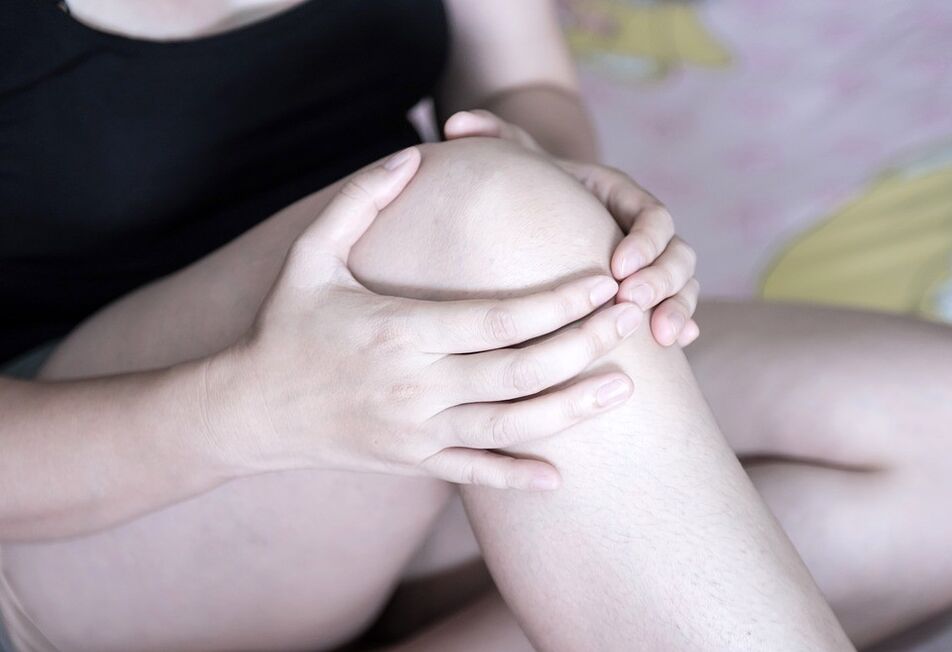
- Pain.One of the initial and main symptoms of knee arthrosis is pain in the knee joint.It is important to note that knee pain will occur only during physical activity: when walking, running, squatting and lying down, this pain will disappear, and after some time it will disappear completely (until the next exercise).
- Crackling in the wrist.Unlike the "crunching" of healthy people's joints, the creaking of joints affected by arthrosis has a different tone: it is rough and "dry".
- Stiffness of the joints.Osteoarthritis of the knee joint of the 1st degree is usually not expressed by stiffness as much as in the following degrees.But as it progresses, the range of motion in the affected joint decreases significantly.
- Deformation of the knee joint.As gonarthrosis progresses, pathological formations develop in the joint-bone spines.It is precisely because of them that the appearance of the joint can be different from a healthy one.In addition, the appearance of the joint can be somewhat "bulky", this is due to excessive accumulation of intra-articular fluid (synovitis).
Course of arthrosis of the knee joint
Osteoarthritis of the knee affects women more often than men.This disease often progresses after forty, but sometimes occurs earlier, usually after injuries and in professional athletes.Gonarthrosis is more complex and difficult, as we wrote earlier, in obese women, as well as in people with severe varicose veins.
The beginning of the disease is characterized by the appearance of minor pain in the knee.Pain often occurs when a person has to stand on his feet for a long time, when he climbs or descends stairs.When a person lies down, the pain disappears, but when he has to stand up, the first steps become very painful for him.
There are three degrees of arthrosis of the knee joint
Arthrosis of the knee joint, 1st degree
Osteoarthritis of the knee joint of the 1st degree is characterized by occasional severe pain in the knee, but at the same time the bones that form the knee joint remain undeformed, but due to synovitis the knee may appear slightly swollen.If there is too much intra-articular fluid, it can spread to the popliteal fossa.This condition is called Baker's cyst.If you have been diagnosed with this, there is no reason to worry, it is not an oncological tumor, it is shrinking under the influence of the drugs prescribed by your doctor.
Osteoarthritis of the knee joint 2 degrees
Arthrosis of the knee joint of the 2nd degree begins 2-3 months after the onset of the disease.At this point, the pain in the knee joint usually increases.This pain no longer occurs only during physical activity, but follows a person with every movement.Usually at this point the pain in the joint is accompanied by a distinct creaking in the knee.Gonarthrosis of the knee joint of the 2nd degree, in addition to intense pain and grinding, is accompanied by a decrease in the ability to bend the leg in the knee joint.Deformation of the joint immediately occurs: bone structures change shape, and when palpated, the joint becomes hard and "rough".
Arthrosis of the knee joint 3 degrees
Arthrosis of the knee joint of the 3rd degree is characterized by constant intense pain;it is even difficult for a man to lie down: he is forced to look for a position in which he can rest.The knees become sensitive to weather changes, and the pain begins closer to night.Gonarthrosis of the knee joint of the 3rd degree is accompanied by a final decrease in mobility;it becomes impossible for a person to bend the leg at the knee joint more than 90°.Sometimes, with 3rd degree gonarthrosis, it is not possible to straighten the leg completely;the person must walk on slightly bent legs.In some cases, an O or X-shaped deformity of the leg develops. In extreme cases, high-grade arthrosis must be treated surgically.
Gonarthrosis of the knee joint: treatment.What is important to know when treating knee joints with medication?
Despite the abundance of advertisements that promise a miracle ointment for joint pain, you must understand that it is impossible to cure gonarthrosis by any method;an integrated approach is needed.
If you discover the first signs of arthrosis, you should consult a doctor as soon as possible.It can be an arthrologist, a rheumatologist, an orthopedist or, first, a general practitioner.
Osteoarthritis of the knee joint: treatment with nonsteroidal anti-inflammatory drugs
So, how to treat osteoarthritis of the knee joint?Usually, non-steroidal (non-hormonal) substances are used to treat joints, which can relieve inflammation in the joint.Gonarthrosis of the knee is treated with drugs that can have antipyretic and analgesic effects.Remember, drugs from this group cannot be taken continuously, because they are able to "mask" the symptoms of the disease.Remember: do not self-medicate, act only under the guidance of a competent specialist who can prescribe treatment based on the individual parameters of your body, taking into account contraindications for the use of drugs.
In recent years, new generation drugs have been used in practice: they are selective agents that act in the same way as NSAIDs, but have less chance of giving unpleasant side effects and do not cause complications.
Osteoarthritis of the knee joint: treatment with chondroprotectors
For arthrosis of the knee joint, you can take substances that nourish the cartilage tissue of the joint and restore its structure.Such drugs are chondroprotectors.Such drugs are most effective if you have grade 1 gonarthrosis of the knee joint, because in extreme gonarthrosis there is almost nothing to restore: all the cartilage is practically destroyed.To achieve the effect of chondroprotectors, you need to use them for a long time: at least 2-3 cycles of treatment, which usually lasts a year and a half.Remember, although this group of medicinal substances has few contraindications, their use should be agreed with the doctor.
Osteoarthritis of the knee joint: treatment with vasodilators
Vasodilator drugs are a good complex therapy for the treatment of arthrosis.They help restore the joint by improving blood flow and relieving spasm of small blood vessels.A pleasant bonus in the treatment of arthrosis of the knee joint, including vasodilators, can be the removal of night pain in the damaged joint.If you want to achieve the maximum therapeutic effect, vasodilators are best used together with chondroprotectors, so that the nutrients from the chondroprotectors will penetrate the joint in greater quantities and will circulate more actively in it.Remember, you must discuss the use of any medication with your doctor.
Osteoarthritis of the knee joint: medicinal ointments and creams
Therapeutic ointments for arthrosis are often used by marketers as a trap for desperate patients.Remember that treating extreme knee arthrosis with ointment will have no effect, but in the initial stages, cream and ointment can significantly alleviate the condition.To improve blood circulation in the joint, you can use joint ointments to relieve pain.Such drugs help to eliminate painful joint spasms and increase blood circulation.You can also use ointments based on bee and snake venom.These fats have an irritating effect that increases blood circulation in the damaged joint.Remember, many poison-based ointments can cause an allergic reaction, so permission for their use should be given only by a specialist.
Therapeutic exercises for arthrosis of the knee joint
Therapeutic physical training for arthrosis of the knee joint is an effective method of treatment in combination with drugs and physiotherapeutic techniques.
You must remember that therapeutic exercises for gonarthrosis are the main method of treatment, because no drugs can strengthen the muscles and blood vessels of the knee joint and activate the blood supply.In addition, therapeutic exercises are the most cost-effective and effective treatment that does not require unnecessary material costs.
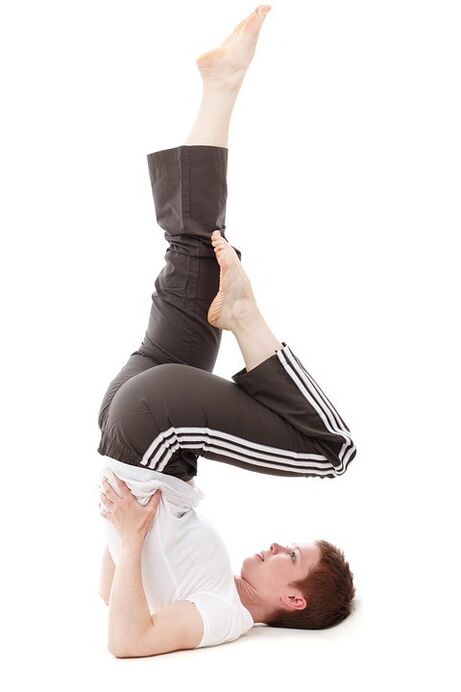
But it is necessary to perform exercise therapy complexes for arthrosis carefully: do not rush to do 200 squats a day or 100 leg swings.In no case should you give intense dynamic loads, but instead of active flexion-extension, do static exercises.Unfortunately, most patients do not like to do static exercises, because they are the most energy-consuming and tiring, but if you can endure 2-3 weeks, exercising regularly, you will not only improve the condition of the knee joint, but you will also find an increase in strength and an increase in performance.
How to do it right
The exercises must be performed very smoothly and gently, stretching the ligaments and joints with light pressure.Severe pain should not be allowed when performing the exercises.Strive for gradualness and regularity, do not rush things: the expected effect will be achieved only with constant moderate loads.
Keep in mind that strength exercises should not be used for the first time after operations on abdominal and thoracic organs, during elevated body temperature or during menstruation in women.It is absolutely necessary to pay attention not only to the joints, but also to the stress on the abdominal and back muscles.This is necessary so that the main blood flow goes to the limbs through the abdominal and back muscles.
Exercise sets are freely available on the Internet, try to perform various exercises for 30-40 minutes each day, following our instructions.
We wish you perseverance and the will to return to the former ease of movement!
Physiotherapy for arthrosis of the knee joint
If you ask whether it is possible to use physiotherapeutic methods of treating arthrosis of the knee joint, we will answer - absolutely!
Osteoarthritis of the knee joint: treatment with laser therapy
Laser therapy is the use for therapeutic purposes of a light beam consisting of a spectrum of ultraviolet, infrared and red radiation.The action of the laser has an anti-inflammatory, anti-edematous and analgesic effect.Typically, a laser therapy treatment consists of 15 sessions.Laser therapy is a relatively safe method of treatment, but it is impossible to cure arthrosis with laser alone;it is an additional method of treatment.
Osteoarthritis of the knee joint: treatment with cryotherapy
Cryotherapy is the effect of local cooling of the joint.There are two methods of cryotherapy: using a cryosauna and applying liquid nitrogen directly to the joint.It is believed that the latter method is the most effective for arthrosis of the knee joint.With the help of cryotherapy, you can improve blood flow to the joint, improve metabolic processes and relieve muscle spasms.The course of treatment is usually 10-12 daily sessions.
Osteoarthritis of the knee joint: treatment with magnetic therapy
Magnetotherapy is exposure to a magnetic field.A fairly common physiotherapeutic method of treatment in hospitals and clinics.Exposure to a magnetic field has an anti-edematous effect, causes non-contact electrical stimulation of muscles and reduces joint inflammation.The course of treatment is prescribed by a physiotherapist.
Osteoarthritis of the knee joint: treatment with ultrasound therapy
Ultrasound therapy is a treatment using sound waves.Ultrasound for arthrosis helps to improve blood supply, reduce muscle spasms and has an analgesic effect.In order to improve the therapeutic effect of ultrasound, a medicinal substance is applied to the affected joint.With the help of ultrasound waves, the drug penetrates the tissue more easily.
Osteoarthritis of the knee joint: thermal treatment
Thermal treatment of arthrosis of the knee joint is used in stages 1-2 of the disease.This method includes treatment with ozokerite, paraffin and mud.The latter deserve special attention: treating arthrosis with mud can be done at home.Medicinal mud should be diluted with water and heated to a temperature of 60°, then mix the obtained mass with unheated mud, cool to 38-42° and apply a 2-3 cm thick layer on the affected joint.Cover the mixture with an oil cloth and a warm blanket on top.Leave for 30 minutes.Perform the procedure every other day with a course of 10-12 procedures.
Diet and herbal medicine for osteoarthritis of the knee joint
Diet for arthrosis is an important factor in successful treatment.But we have to understand that the development of arthrosis is not related to any eating habits, but excess weight contributes to the development of arthrosis of the lower extremities.However, you need to lose weight properly: in no case should you starve or go on strict diets, because as you know, after leaving strict diets, the kilograms will be gained again, and often in even greater quantities.

We must know that excess weight is also a disease, but it can and should be treated.In obesity, the regulation of appetite and satiety centers is disturbed, but it is possible to "put them on the right track".
First, you need to recognize the problem, which is often related to bad eating habits.Second, you must learn to set realistic goals for yourself.A weight reduction of 10-15% compared to the initial level is a great result.Believe me, even if you lose even 5% of your original weight, you will immediately feel relief: your blood pressure will lower, and the condition of your joints will improve.
Aim to lose weight
In any case, if your goal is to lose weight, then you will have to reconsider your diet, composition and amount of food consumed.Reduce the consumption of confectionery products, pastries and various types of "fast" carbohydrates.
To begin with, we recommend that you try a simple way of eating.Prepare your usual meal by placing your usual portion on a plate.Now eat only half of the food on your plate.You'll soon find that you just eat the whole portion out of habit, even though you only need very little to satisfy your hunger.Even if you are hungry, slowly eat half of your portion and rest for 10 minutes.You will be surprised that after this time you simply do not want to finish the remaining portion: the hunger has disappeared, and with it the frantic desire to eat everything.After two months of this "insufficient diet" you will see a noticeable result.Try it!
Along with proper food intake, one must not forget about sufficient fluid intake.Those people who do not have severe cardiovascular or kidney disease and who do not suffer from edema can safely increase the amount of fluid they drink to 2 liters per day.
Alternative treatment of arthrosis of the knee joint
Herbal medicine for arthrosis.It is important to note that infusions and decoctions for arthrosis help less than the above methods, but they can be of relative benefit.

Within a month, you can take one of the following infusions:
remember, you should take each infusion or decoction only separately, and then replace them with another.Don't drink it all at once!
Birch decoction for arthrosis
Birch decoction for arthrosis: pour 1 tablespoon of birch buds with a glass of boiling water, cook on low heat for 15 minutes and leave to stand for 1 hour, covering the container warmly.After an hour, it is necessary to strain and add boiled water to the soup to the original volume.Take the infusion for a quarter (1/4) of a glass 4 times a day, one hour after meals for one month.
Linden infusion for arthrosis
Linden infusion for arthritis: pour 3 tablespoons of linden flowers with a glass of boiling water, cook on low heat for 15 minutes, then cool and strain.Take the infusion warm, 1 glass 3 times a day after meals for 3 weeks.
Burdock decoction for arthrosis
Decoction of burdock root for arthrosis: pour 1 tablespoon of burdock root with 1 glass of boiling water, cook on low heat for about 30 minutes with frequent stirring, after which the decoction is cooled to room temperature and strained.Take the decoction warm, half (1/2) cup 3 times a day before meals for a month.
Alder infusion for arthrosis
Alder infusion for arthritis: pour 2 tablespoons of gray alder cones (Alnus incana) with 1 glass of boiling water, keep on low heat for 15 minutes, then cool and strain.Take an infusion of alder cones, one third (1/3) of a glass, 3 times a day half an hour before meals for a month.
A collection of medicinal herbs for arthrosis
A collection of medicinal herbs for arthrosis: mix equal parts of willow bark, parsley root, black elder flowers and nettle leaves, chop well.Pour 4 tablespoons of the mixture with 1 liter of boiling water and cook on low heat for 5-10 minutes, then leave for 2 hours and strain.Take half a glass of this mixture 4 times a day half an hour before meals.The course of treatment is 1 month.
Conclusion
Despite the fact that arthrosis is a very unpleasant disease, when faced with it, it is necessary to draw the right conclusions from the disease, reduce negative emotions and start fighting for your full physical and spiritual health, following the recommendations we offer.Then you will surely beat the disease!